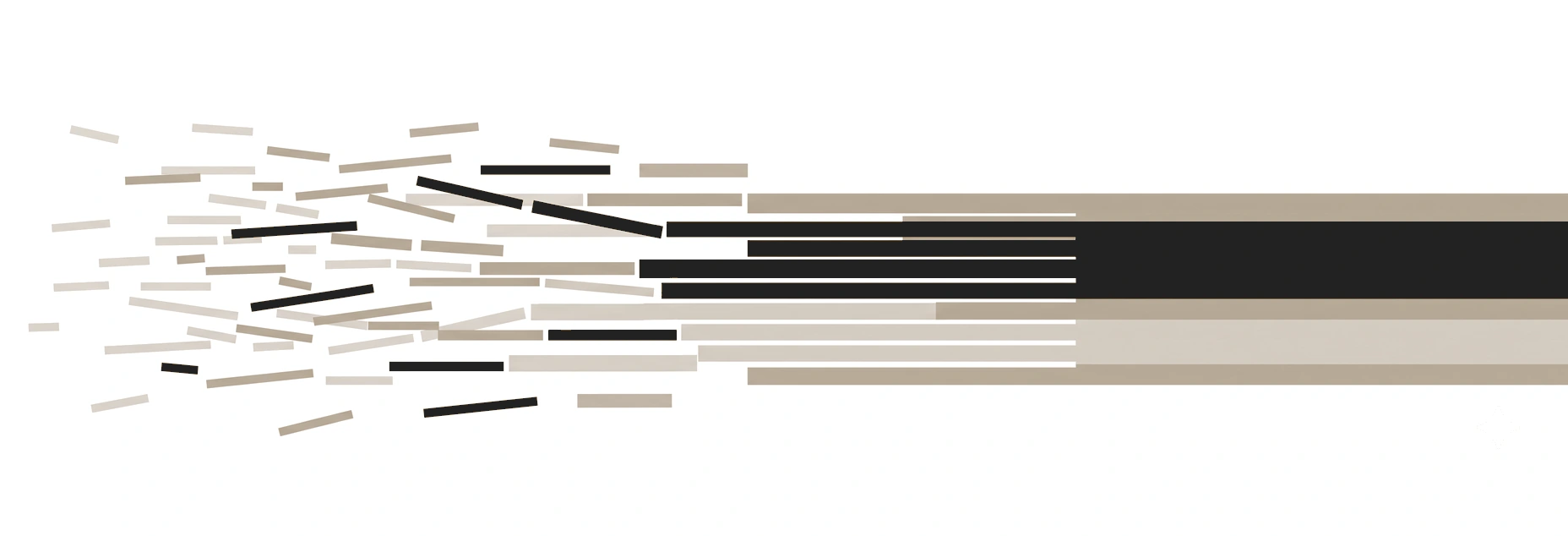
AI systems are becoming increasingly capable of processing long streams of information. They can transcribe conversations, summarize meetings, retrieve documents, and maintain context across interactions. As these systems begin to operate over longer periods of time, however, another problem becomes increasingly important, deciding what should persist. An AI system cannot remember everything. It has to decide what is worth remembering.
A recording contains everything that happened. A transcript contains everything that was said. Neither is necessarily memory. Memory begins when a system decides that some part of an experience should persist, that another part can be discarded, and that existing knowledge should change when new information arrives. Our work on Memtwin approaches long-term AI memory from this perspective. We view memory formation not simply as a storage problem, but as a judgment problem.
Experience Is Not Memory
Consider a conversation about a project. A person may mention names, dates, ideas, temporary decisions, corrections, questions, and unrelated details within a few minutes. A system that stores the entire conversation has preserved the experience, but it has not necessarily formed a useful memory. A memory system must determine what should persist, what should be discarded, what should update something already known, what has become outdated, and what should remain as historical context. The important shift is from storing events to maintaining a changing state of knowledge.
When new information arrives, the system is not simply asking where to store it. It is asking whether that information deserves to change what it knows. That is the first judgment involved in long-term memory.
Maintaining an Evolving State
Memtwin addresses this first layer of judgment. When a new experience arrives, it is considered in relation to the existing memory state. It may create a new memory, reinforce something already known, contradict an existing memory, replace an older state, or have no lasting effect. This is fundamentally different from appending another entry to a database. The system is maintaining an evolving representation of what it knows.
This becomes particularly important when information changes over time. Suppose someone says in September that a product will launch in October. A month later, they say that the launch has moved to November. A useful memory system should not treat these as two unrelated facts, nor should it simply erase the first statement. October was the expected launch date. November is the current one. The earlier state explains how the current state came to be.
Memory therefore needs to preserve both current state and historical continuity. The system must know not only what is true now, but what was true before, when that changed, and how one state became another. This temporal dimension is part of the judgment problem itself.
Importance Changes Over Time
The same principle applies to importance. The value of a memory is not necessarily determined when the experience occurs. Something that appears insignificant today may become important later. A project name mentioned casually in one conversation may become central to a conversation months afterward. Information that was once highly relevant may also become less useful as circumstances change.
This means that importance cannot be treated as a one-time classification. Memtwin treats it as part of memory evolution, allowing memory to change as new information arrives and as subsequent interactions reveal whether information continues to matter.
A long-lived AI system therefore cannot simply preserve everything indefinitely. It needs to compress a large stream of experience into a smaller representation that remains useful. Ordinary compression asks how information can be preserved using less space. Memory asks a different question. Which information should survive compression? A system can preserve the words of an experience while losing the information that actually matters. The goal is therefore not maximum retention, but useful retention.
This is the part of the judgment layer that Memtwin is designed to address today. Given an experience and an existing memory state, determine how the memory state should change. The system must decide whether information deserves to become durable memory, whether it should modify existing knowledge, how changing facts should be represented, how historical states should be preserved, and how importance can evolve over time. In this sense, Memtwin moves long-term memory beyond passive storage. Rather than simply accumulating a history, it maintains an evolving model of what it knows.
What Comes Next
The first judgment layer in memory is deciding how new experience should change what an AI knows. The next challenge is understanding what that knowledge means to the individual using the system. We are focusing on two problems.
Learning what matters. Different people value different information, and those priorities change with context. We are exploring how a memory system can learn a person’s notion of importance from how they interact with their memories, rather than relying entirely on explicit instructions.
Predicting what will matter. The value of a memory is often revealed only later. A memory that is ignored today may become essential months from now. We are exploring how signals such as retrieval, correction, and repeated use can help a system anticipate which memories will become useful in future contexts.
Together, these problems point toward a different conception of AI memory, not a system that simply stores more of the past, but one that continuously learns what matters to a person and what is likely to matter next.
That is the direction we are taking Memtwin next.